
İSKOM – Istanbul Water Control and Automation Center
Date: Tuesday, 24 November 2026
Time: 09:00 – 13:00 (exact time TBC)
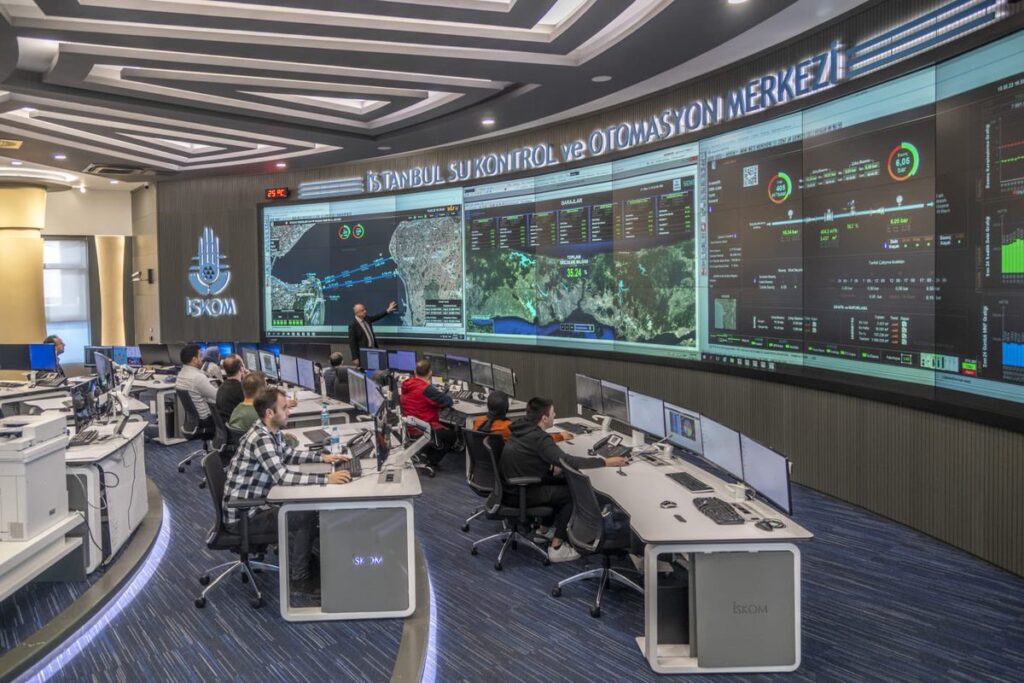
The Istanbul Water Control and Automation Center (İSKOM) is the central monitoring and control facility of the Istanbul Water and Sewerage Administration (İSKİ), supporting the reliable, efficient, and continuous operation of Istanbul’s drinking water system.
Through advanced SCADA and automation systems, İSKOM enables real-time monitoring and remote control of key infrastructure, including transmission pipelines, pumping stations, reservoirs, flow meters, valves, and other critical equipment. Operators can monitor hydraulic conditions, water levels, flow rates, pressures, and equipment status, allowing İSKİ to optimize water distribution, detect abnormalities, and respond rapidly to operational issues.
İSKOM supports operational efficiency, water security, service continuity, and data-driven decision-making by integrating real-time network information with centralized operational coordination.
This role is particularly important given the scale of Istanbul’s water infrastructure. İSKİ serves more than 15.7 million people, managing approximately 20,000 km of distribution network, 3,114 km of transmission pipelines, 210 reservoirs, and 24 drinking water treatment plants with a combined capacity of around 4.93 million m³/day.
Overall, İSKOM functions as the operational nerve center of Istanbul’s water supply system, integrating digital technologies, automation, real-time data, and İSKİ’s physical infrastructure to support the continuity, reliability, efficiency, and resilience of drinking water services.
İSKİ Kağıthane Drinking Water Treatment Plants
Date: Tuesday, 24 November 2026
Time: 09:00 – 13:00 (exact time TBC)
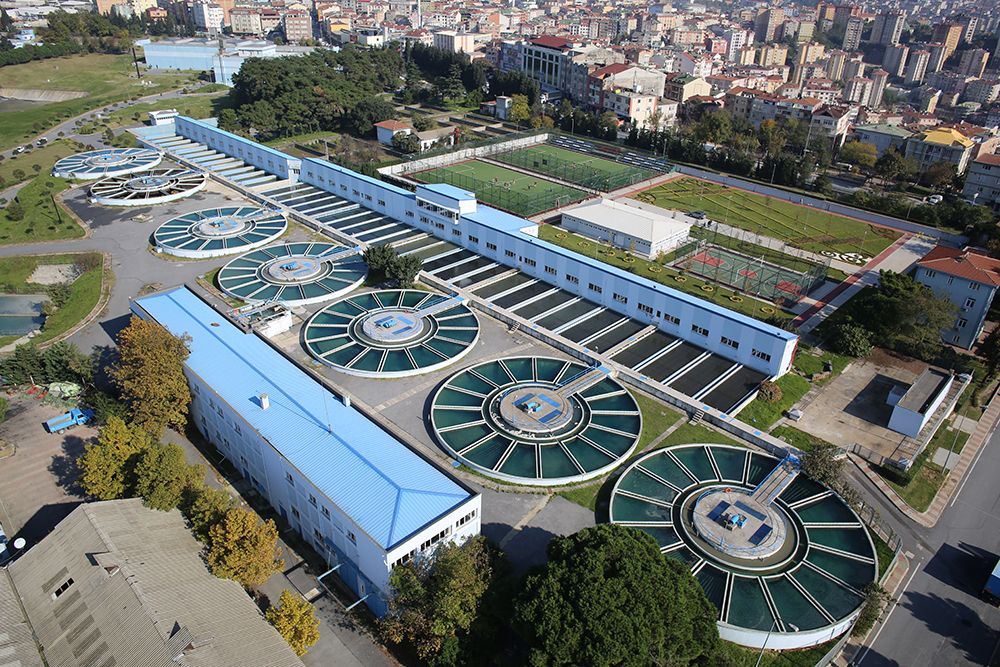
The İSKİ Kağıthane Drinking Water Treatment Complex comprises two major facilities: the Çelebi Mehmet Drinking Water Treatment Plant and the Yıldırım Bayezid Drinking Water Treatment Plant, with a combined treatment capacity of 700,000 m³/day.
The Çelebi Mehmet Plant, commissioned in 1978, has a capacity of 400,000 m³/day, while the Yıldırım Bayezid Plant, commissioned in 1956, has a capacity of 300,000 m³/day. The complex primarily receives raw water from Terkos Lake and Alibeyköy Dam and supplies treated water to several districts, including Kağıthane, Şişli, Beyoğlu, Beşiktaş, Sarıyer, Eyüpsultan, and Fatih, as well as parts of Gaziosmanpaşa, Bayrampaşa, and Esenler.
The complex includes six main components:
- Aeration and pre-ozonation units for initial water conditioning and oxidation.
- Çelebi Mehmet Drinking Water Treatment Plant with a capacity of 400,000 m³/day.
- Yıldırım Bayezid Drinking Water Treatment Plant with a capacity of 300,000 m³/day.
- Pumping stations and clear water reservoirs for storage, transfer, and distribution.
- Sludge dewatering unit for the management of treatment residuals.
- Energy infrastructure supporting treatment, pumping, and auxiliary operations.
With its substantial treatment capacity and integration with Istanbul’s wider water supply network, the Kağıthane complex is a strategically important component of İSKİ’s drinking water infrastructure, supporting the reliable supply of safe drinking water to a significant part of the city.
İSKİ Ataköy Advanced Biological Wastewater Treatment Plant
Date: Tuesday, 24 November 2026
Time: 09:00 – 13:00 (exact time TBC)
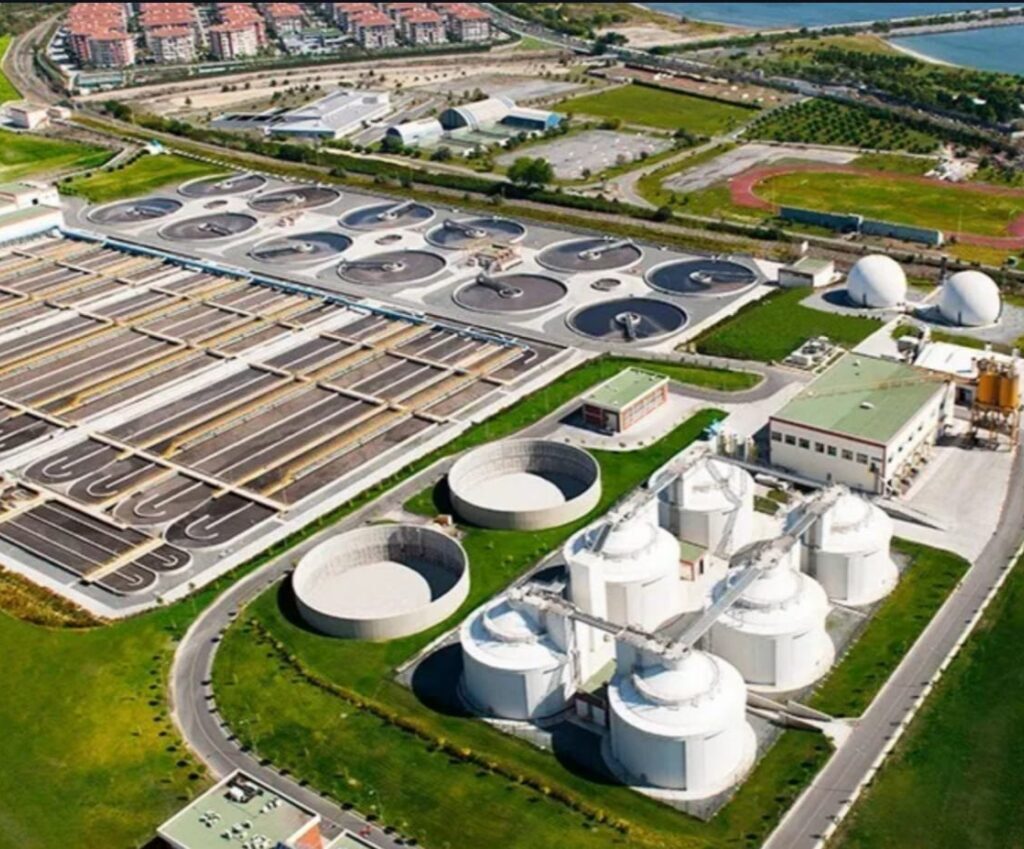
The İSKİ Ataköy Advanced Biological Wastewater Treatment Plant is one of Istanbul’s major wastewater infrastructure facilities, serving densely populated areas of the city. With a treatment capacity of 400,000 m³/day, it serves a population equivalent of approximately 1.6 million people and contributes to the protection of the Marmara Sea and Istanbul’s sustainable water management objectives.
The treatment process includes coarse and fine screening, aerated grit removal, primary sedimentation, biological phosphorus removal, nitrification–denitrification, and secondary sedimentation. These processes enable effective removal of organic matter, nitrogen, and phosphorus.
The plant also features an integrated sludge management and energy recovery system, including sludge thickening, anaerobic digestion, dewatering, and drying. Biogas produced through anaerobic digestion is used in cogeneration to generate electricity and heat, improving energy efficiency and reducing the plant’s carbon footprint. Odor control systems further minimize environmental impacts.
With its advanced biological treatment, resource recovery, and energy-efficient operations, the Ataköy plant is an important component of Istanbul’s wastewater management infrastructure and contributes to the protection of water resources and the wider marine environment.